| |
FOODWORLD
Healthy
family meals
on a
budget!
New
Zealand's Easiest Family Recipes
|
|
Serving healthy food to your family is challenging, especially
when you are on a low budget. We have low cost meals for people
on a budget with cost saving ideas and budget recipes. They
are all healthy eating ideas and are cheap to prepare. Change
the recipes to suit your family's tastes and the ingredients
you have. Cutting costs on food doesn't mean you have to cut
on quality. It's still possible to prepare meals that not only
taste great, but are also good for you. |
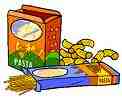
Pasta
- how to cook pasta! |
We
all know what pasta is. What we don't all know is how to cook
it properly. The first mistake people make when cooking pasta
is the size of the pan to use. Pasta needs a lot of space to
move around in while it cooks. If it doesn't have this space,
then there is a good chance that the pasta will stick together
or to the sides of the pan, with disastrous consequences for
the finished dish.
|
| 
|
|
HOW TO COOK
PASTA
Pasta:
1 packet of your favourite
pasta (penne, spaghetti, rigatoni, fettuccine, macaroni)
1 tablespoon oil (for cooking)
1 tablespoon oil (for tossing)
1 teaspoon salt
- Fill the largest pot you have
with water.
- Add 1 tablespoon vegetable
oil.
- Place it on the cooker top.
Stir to combine.
- Turn the knob to high.
- When the water starts bubbling
up at the surface (the technical term for this is "boiling"),
add up to a handful of salt anywhere. Most Americans do
not add salt, whereas Italians add about a handful.
- Dump the container of pasta
into the pot.
- Agitate it slightly with a
long serving spoon, preferable one with slots or holes in
it.
- Keep your eye on it as it
continues to boil and stir it just enough to prevent the
pasta from sticking to the bottom every 1-2 minutes.
- When it's been boiling for
about 10 minutes (check the package for suggested cooking
time), take a piece of the pasta out and taste it.
- If it's too hard to bite or
tastes funny when you bite it, it needs to cook a little
longer. Also, if you see white in the center, your pasta
needs to cook a little longer.
- When it's chewy but firm in
the center, it's ready. This is referred to as al dente
in Italian.
- Empty the entire pot of pasta
into a colander.
- Shake out the excess water
and then pour back into the pot.
- Add the remaining tablespoon
of vegetable oil. Toss.
- Cover with your favorite sauce
and shake it (inside the hot pot).
- Serve it!
Tips
- Use
plenty of water. The most common cause of "sticky" pasta
is cooking with too little water. Use at least 4 quarts
of water for each pound of pasta(4 liters for each one-half
kilogram). No oil or other additives are required.
- Add
salt to the water. Salt enhances the pasta's flavor and
allows the sauce flavors to "blend" better.
- Add
some of the pasta water to your sauce. If you're making
your own sauce, add a bit of the water used to cook the
pasta if you need to adjust it's thickness. The dissolved
starches will thicken and enrich it's texture. Note that
the "right" amount varies according to recipe, batch size
and preference.
- Italians
adopt a "leave it alone" or "don't mess with it" policy
when cooking pasta. Don't agitate or stir it too much. This
goes for the sauce as well.
- Different
pastas cook for varying times. Thin linguine, for example,
cooks much faster than rigatoni.
- For
a hotter boil, cover your pot. Just be sure to remove it
once you put the pasta in.
- When
your pasta is ready, the outer edges will begin to lighten
in color.
- Some
people prefer to rinse their pasta in the colander to wash
away the starches. Do not do this! In addition to the sauce
adhering better because of the starch, if you rinse it,
you will be cooling the pasta before you add the sauce.
Instead, drain the pasta, add it back into the pot you cooked
it, turn on the heat and add the sauce, stirring until well-mixed
and hot. The pasta will be thoroughly coated by the sauce
and the pasta will stay hot when you serve it.
- If
you make spaghetti and they are not submerged at beginning,
do not break them. Wait 30 seconds and gently use your fork
to bend them and submerge them.
- I'm
sure you've heard the old wives tale that if it sticks to
the ceiling, it's done cooking. This isn't true. A barely
cooked piece of pasta can still stick to your ceiling.(It
actually depends on what kind of material your ceiling is
made out of).
Warnings
If the bubbles
look like they're about to spill out of the pot, lower the heat
to medium-high.
Never add anything to reduce this. This may be prevented by
shaking.
When emptying the pasta into the boiling water, do it slowly
so the hot water doesn't splash out of the pot and burn you. |
Healthy
family meals
on a
budget!

|
|